Phase One
Understanding Menopause:
A Natural Transition
Menopause is not a single event, but a natural biological transition that marks the end of a woman's reproductive years. It's officially diagnosed after 12 consecutive months without a menstrual period.
Perimenopause
The transition phase leading up to menopause, where hormones fluctuate.
Menopause
The point in time when you have gone 12 months without a period.
Postmenopause
The years following menopause, focusing on long-term wellness.
While the experience is unique for every woman, the underlying biological shift involves a decrease in the production of estrogen and progesterone by the ovaries.
"1 in 2 women will experience significant bone loss within the first 5 years after menopause."
Common Symptoms
- Hot flashes & night sweats
- Mood changes & anxiety
- Sleep disruption & fatigue
- Brain fog & focus issues
- Vaginal dryness
- Joint & muscle pain
- Changes in libido
Average Age Range
Experience Hot Flashes
Phase Two
Bone Health &
Osteoporosis Risk
Estrogen plays a vital role in bone remodeling—the process where old bone is replaced by new, healthy bone. During menopause, as estrogen levels drop, bone loss can accelerate significantly.
Risk Factors to Consider:
- Advancing Age
- Family History
- Low Body Weight
- Sedentary Lifestyle
- Smoking & Alcohol
- Certain Medications
A DEXA scan is the gold standard for measuring bone density. It's a quick, painless imaging test that helps your doctor determine if you have osteopenia (low bone mass) or osteoporosis.
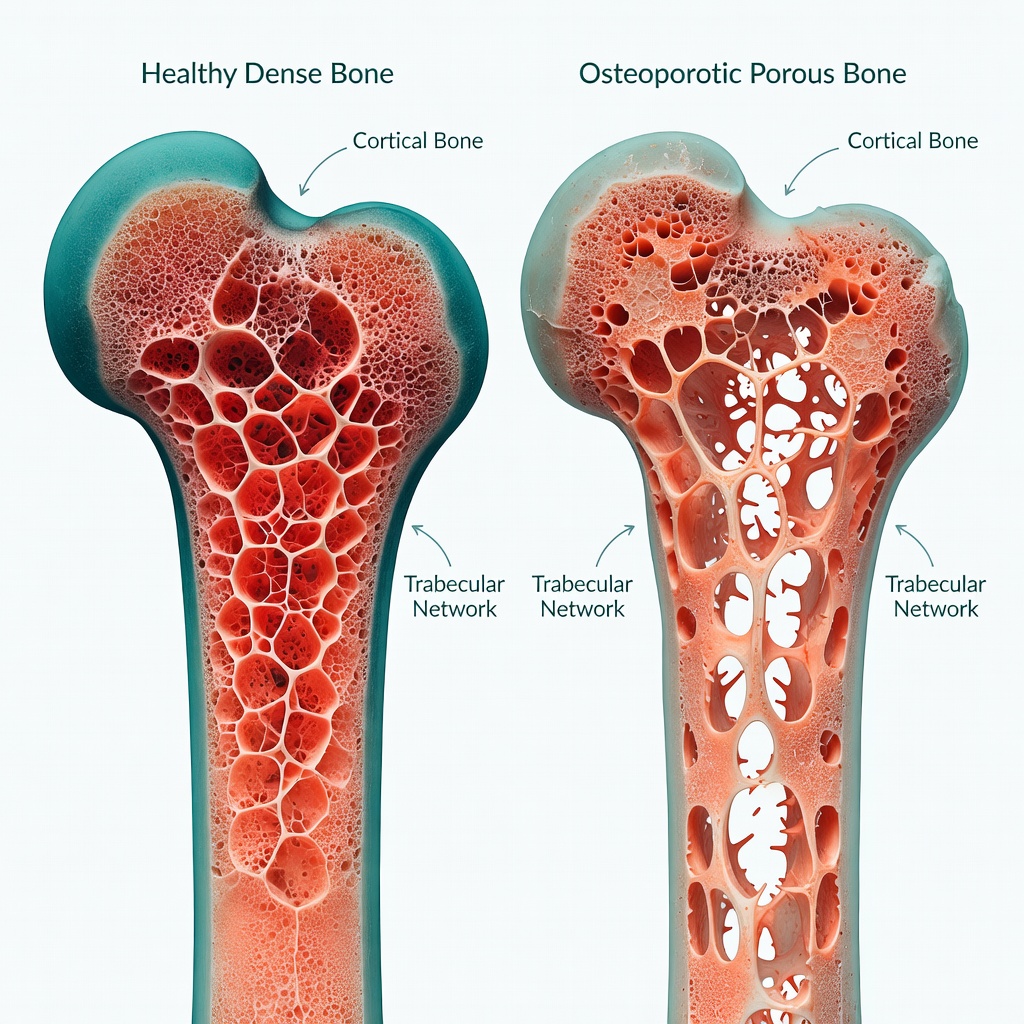
Women worldwide with osteoporosis
Women over 50 will have a fracture
Bone density drop in 5-7 years post-menopause
Phase Three
Nutrition for Stronger Bones
What you put on your plate is your primary defense against bone loss. A balanced diet rich in specific micronutrients can help maintain bone density and overall vitality.

Calcium
1,200mg / day
Top Sources: Dairy, leafy greens, tofu, fortified foods
Vitamin D
800–1,000 IU / day
Top Sources: Sunlight, fatty fish, egg yolks, fortified milk
Magnesium
320mg / day
Top Sources: Nuts, seeds, whole grains, dark chocolate
Vitamin K2
Daily serving
Top Sources: Fermented foods, cheese, egg yolks
Protein
1.2g per kg / body weight
Top Sources: Lean meats, legumes, fish, greek yogurt
Omega-3s
Two servings / week
Top Sources: Salmon, walnuts, flaxseed, chia seeds
Mindful Moderation
Excessive intake of alcohol, caffeine, and high-sodium foods can interfere with calcium absorption. Processed sugars also promote inflammation, which may negatively impact bone health.
Phase Four
Movement as
Medicine
Weight-Bearing
30 min, 5x / week
Walking, dancing, hiking, or climbing stairs.
Stimulates bone cell growth through impact.
Resistance Training
2–3x / week
Using weights, bands, or bodyweight exercises.
Targets critical areas like spine and hips.
Balance & Flexibility
Daily practice
Yoga, Tai Chi, or Pilates.
Improves posture and prevents falls.
Cardio Focus
150 min / week
Swimming, cycling, or brisk walking.
Boosts heart health and improves mood.
"Women who exercise regularly reduce their fracture risk by up to 40%."

Phase Five
Medical Treatments
& Care Options
Managing menopause and bone health often requires a multi-faceted approach. From hormonal support to non-hormonal medications and lifestyle adjustments, modern medicine offers many ways to navigate this transition comfortably.

Hormone Replacement Therapy (HRT)
Benefits: Significantly reduces hot flashes, protects bone density, stabilizes mood, and improves sleep quality.
Types: Estrogen-only (for women without a uterus) or combined Estrogen and Progesterone.
Delivery: Available as pills, patches, gels, or sprays.
Important: Always consult your healthcare provider before starting any new medical treatment or supplement regimen.
Phase Six
Mind, Mood & Sleep
The hormonal shifts of menopause don't just affect the body—they deeply impact the mind. Prioritizing mental well-being and restorative rest is essential for long-term health.
Sleep Hygiene
- • Aim for 7–9 hours of sleep nightly
- • Keep the bedroom cool (65°F / 18°C)
- • Avoid screens 60 mins before bed
- • Consistent wake & sleep times
- • Evening relaxation routines
Stress Management
- • Daily mindfulness or meditation
- • Deep breathing exercises
- • Creative outlets & journaling
- • Counseling or talk therapy
- • Maintaining social connections
Mental Wellbeing
- • Recognize mood as hormonal
- • Professional depression screening
- • Cognitive Behavioral Therapy
- • Joy-focused physical activity
- • Forgiving your limitations
"Up to 23% of perimenopausal women experience clinically significant depression."
You are not alone in this journey
Frequently Asked Questions
Women Just Like You
Real stories from real women navigating menopause with confidence.
"I finally understood why my bones were at risk. The quiz was eye-opening and the guide gave me a real plan. I feel so much more in control of my health now.
"I was struggling with hot flashes and fatigue. This site helped me have a real conversation with my doctor. It's the first time I felt heard and understood.
"The nutrition section changed how I eat. My last DEXA scan showed improved bone density! I can't thank you enough for making this science accessible.
Get Weekly Menopause Wisdom
Join 10,000+ women receiving evidence-based tips on menopause, bone health, and feeling your best — straight to your inbox. No spam, ever.

