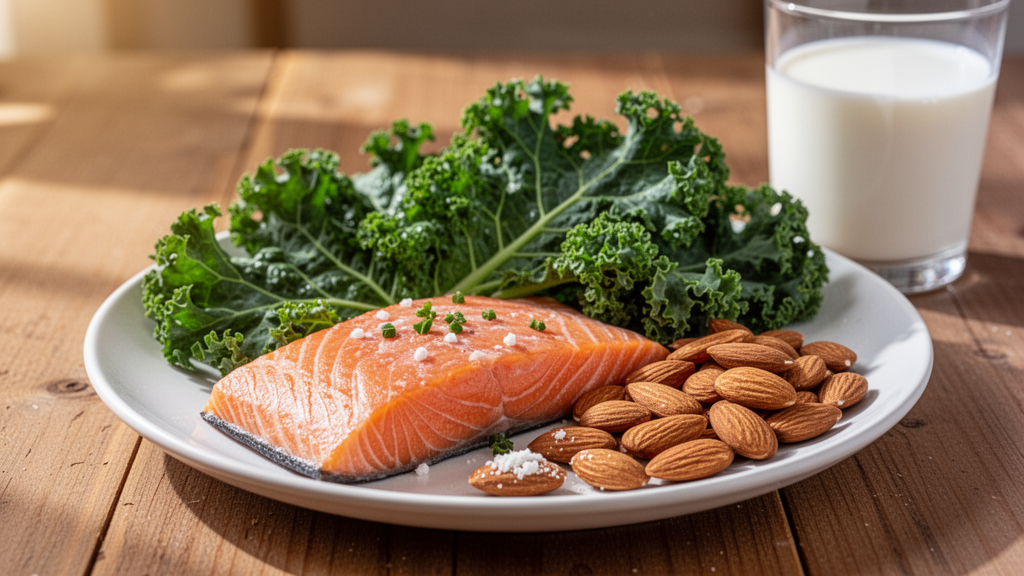
The Best Foods for Bone Health During Menopause
Why Nutrition Matters So Much for Bone Health
When oestrogen levels drop during menopause, bone loss accelerates dramatically. In the first 5-10 years after menopause, women can lose up to 20% of their bone density — significantly increasing the risk of osteoporosis and fractures.
While this sounds alarming, the right nutrition can put the brakes on bone loss and help maintain — and even build — bone density throughout midlife and beyond. Here's what the science says about the best foods for stronger bones.
Calcium: The Foundation of Strong Bones
Calcium is the primary mineral in bone. Post-menopausal women need 1,200mg per day — yet most women get far less than this through diet alone.
Top calcium-rich foods:
- Dairy products — milk, yoghurt, and cheese are the richest sources. One cup of milk provides around 300mg.
- Canned salmon and sardines (with bones) — 3oz of sardines provides about 325mg
- Fortified plant milks — oat, soy, and almond milk are often fortified with calcium equal to dairy
- Leafy greens — kale, bok choy, and broccoli (note: spinach contains calcium but also oxalates that reduce absorption)
- Tofu — made with calcium sulfate, one serving can provide 250-750mg
- Almonds — a small handful provides around 75mg
Vitamin D: The Key That Unlocks Calcium
Calcium is useless without Vitamin D, which your body needs to absorb and use calcium properly. Few foods naturally contain Vitamin D, which is why deficiency is so common — especially in countries with limited sunlight.
Best dietary sources of Vitamin D:
- Oily fish — salmon, mackerel, herring, and sardines
- Egg yolks
- Fortified foods — breakfast cereals, plant milks, some margarines
- Mushrooms exposed to UV light
Most women over 50 are advised to supplement with 800-1000 IU of Vitamin D3 daily, particularly through winter months. Ask your GP to test your Vitamin D levels — many women are deficient without knowing it.
Protein: Often Overlooked, Critically Important
Bone is approximately 50% protein by volume. Research consistently shows that adequate protein intake protects bone density and reduces fracture risk in older women. Aim for 1.0-1.2g of protein per kg of body weight per day.
Good sources: eggs, poultry, fish, legumes, Greek yoghurt, cottage cheese, and tofu.
Magnesium: The Unsung Hero
Magnesium works alongside calcium to build bone — around 60% of the body's magnesium is stored in bone. Studies show magnesium deficiency is associated with lower bone density and increased fracture risk.
Best sources: pumpkin seeds, spinach, dark chocolate (70%+), avocado, black beans, and whole grains.
Vitamin K2: The Bone Builder Many Women Miss
Vitamin K2 activates a protein called osteocalcin that binds calcium to bone. Without adequate K2, calcium floats around your bloodstream rather than going into your bones. Research suggests K2 supplementation meaningfully reduces fracture risk.
Best dietary sources: fermented foods (natto — a Japanese soy product is the richest source), hard cheeses, egg yolks, and dark chicken meat.
Foods to Limit for Better Bone Health
Some foods actively work against your bones:
- Excessive alcohol — more than 2 units per day interferes with calcium absorption and impairs bone-building cells
- High-salt foods — sodium causes your kidneys to excrete calcium, so reduce processed foods and salty snacks
- Excessive caffeine — very high intakes (more than 4 cups of coffee per day) can slightly reduce calcium absorption
- Fizzy drinks — particularly colas, which contain phosphoric acid that may leach calcium from bones
A Sample Bone-Building Day of Eating
Breakfast: Greek yoghurt with berries and a sprinkle of pumpkin seeds + fortified oat milk in your tea
Lunch: Sardine salad with kale, avocado, and a lemon tahini dressing
Snack: A small handful of almonds and a piece of dark chocolate
Dinner: Baked salmon with broccoli, roasted sweet potato, and a side of edamame
Dessert: A small portion of hard cheese
The Bottom Line
Your daily food choices are one of the most powerful tools you have for protecting your bones. Focus on calcium, Vitamin D, protein, magnesium, and K2 — and you'll be giving your skeleton the best possible protection through menopause and beyond.
