The Best Foods for Bone Health During Menopause
Why Bone Health Matters More After Menopause
In the years surrounding menopause, women can lose up to 20% of their bone density. This happens because oestrogen — which plays a critical role in maintaining bone mass — drops sharply during the transition. The result is an increased risk of osteoporosis and fractures, particularly in the spine, hips, and wrists.
The encouraging news is that nutrition is one of your most powerful tools for protecting and even rebuilding bone density. What you eat every day has a direct impact on your skeletal health well into your 60s and beyond.
The Bone-Building Nutrients You Need
Before we get to specific foods, it helps to understand the key nutrients involved in bone health:
- Calcium — The primary mineral in bone tissue. Your body cannot produce it; you must get it from food or supplements.
- Vitamin D — Essential for calcium absorption. Without enough vitamin D, your body can absorb as little as 10–15% of dietary calcium.
- Magnesium — Works alongside calcium to support bone mineralisation.
- Vitamin K2 — Helps direct calcium into bones rather than arteries.
- Protein — Often overlooked, but adequate protein is essential for bone matrix formation.
Top Bone-Healthy Foods to Eat Regularly
1. Dairy and Fortified Alternatives
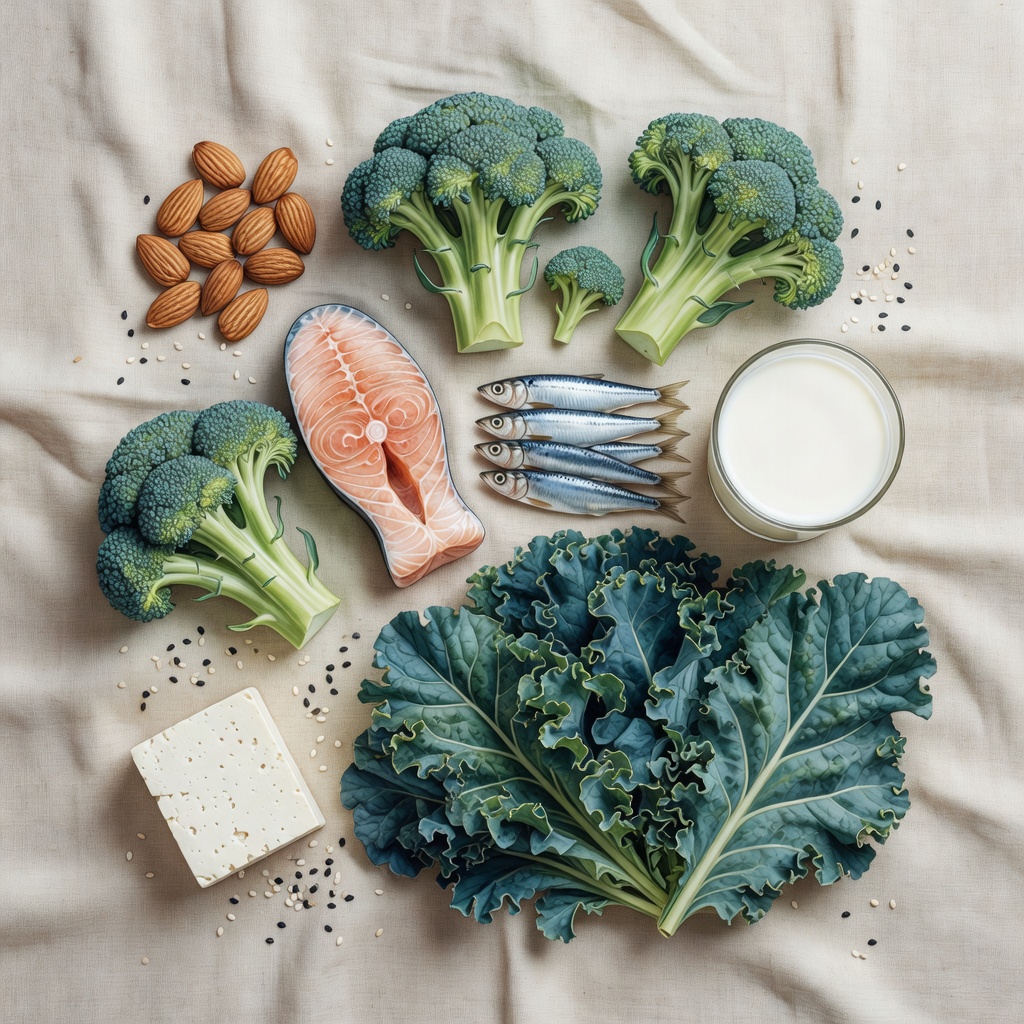
Full-fat yoghurt, milk, and cheese are excellent sources of both calcium and protein. If you're dairy-free, choose fortified plant milks (oat, almond, or soy) that provide at least 120mg of calcium per 100ml, and shake the carton well before use.
2. Oily Fish
Sardines and tinned salmon (eaten with the bones) are exceptional — they provide both calcium and vitamin D in one food. Aim for two to three portions of oily fish per week. Mackerel, trout, and fresh salmon also provide vitamin D.
3. Leafy Green Vegetables
Kale, bok choy, broccoli, and spring greens are good plant-based calcium sources. They also provide vitamin K1, a precursor to K2. Spinach and Swiss chard do contain calcium, but also oxalates that reduce absorption — so vary your greens.
4. Tofu (Calcium-Set)
Check the label for calcium sulphate or calcium chloride in the ingredients — these indicate calcium-set tofu, which can provide up to 350mg of calcium per 100g serving. It's also a complete protein source, making it doubly valuable.
5. Nuts and Seeds
Almonds are the richest nut source of calcium. Sesame seeds and tahini (sesame paste) are extraordinarily calcium-dense — one tablespoon of tahini contains around 130mg. Chia seeds also offer a meaningful calcium contribution alongside omega-3s.
6. Eggs
Eggs are one of the few whole food sources of vitamin D, particularly in the yolk. Opt for free-range or pasture-raised eggs where possible, as vitamin D content is significantly higher.
7. Legumes
White beans, chickpeas, lentils, and black-eyed peas provide calcium, magnesium, and plant protein. They're also rich in fibre, which supports the gut microbiome that plays a role in oestrogen metabolism.
The goal isn't perfection — it's consistent, daily nourishment. Even small improvements to your diet, maintained over time, can make a measurable difference to bone density.
Foods to Limit for Bone Health
Some foods actively work against your bones when consumed in excess:
- Alcohol — More than one to two drinks per day reduces calcium absorption and interferes with vitamin D metabolism.
- Excess caffeine — High caffeine intake (more than four cups of coffee daily) may slightly increase calcium loss through urine.
- High-sodium processed foods — Salt causes calcium to be excreted through the kidneys. Reducing processed food helps your body retain calcium.
- Fizzy drinks (especially cola) — Phosphoric acid in cola can interfere with calcium absorption and has been linked to lower bone density.
Getting Enough Vitamin D
Vitamin D is notoriously difficult to obtain from food alone. Sunlight exposure on bare skin (without sunscreen) for 15–30 minutes daily during spring and summer is the most effective source for most people. In autumn and winter — or if you have darker skin, limited sun exposure, or are over 65 — supplementation is recommended.
Public Health England advises a daily supplement of 10 micrograms (400 IU) of vitamin D for adults. Many menopause specialists recommend higher doses; discuss the right level with your GP.
A Sample Day of Bone-Healthy Eating
- Breakfast — Greek yoghurt with a tablespoon of ground flaxseed, a handful of almonds, and berries
- Lunch — Kale and white bean salad with tahini dressing and a boiled egg
- Dinner — Baked salmon with roasted broccoli and a side of lentil soup
- Snack — Fortified oat milk latte or a small pot of calcium-set tofu with miso dressing
The Bottom Line
Bone protection during menopause is a long game — and your plate is one of the most powerful places to start. Focus on variety, consistency, and getting key nutrients in at every meal. Combine good nutrition with weight-bearing exercise and regular bone density checks, and you'll be giving your skeleton the best possible foundation for the decades ahead.
