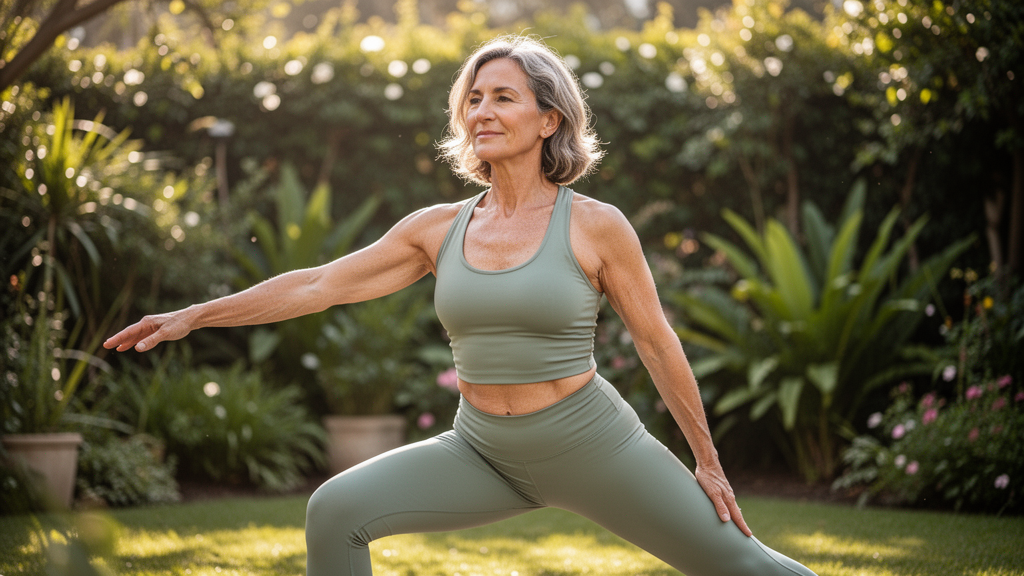
The Best Exercises to Protect Your Bones After 50
Why Exercise Is Non-Negotiable for Bone Health
Bone is living tissue that responds to mechanical stress. When you load your skeleton — through impact, resistance, or weight — your bones respond by becoming denser and stronger. Without this stimulus, particularly after menopause when oestrogen's protective effect is lost, bones thin at an accelerating rate.
The good news: it's never too late to start. Studies show that women in their 70s and 80s can meaningfully improve bone density through the right exercise programme. Here's exactly what works — and what doesn't.
The Two Types of Exercise That Build Bone
1. Weight-Bearing Exercise
Weight-bearing exercise means any activity where you are on your feet and moving against gravity — your skeleton has to support your body weight. Examples include:
- Walking (especially brisk walking with hills)
- Hiking
- Dancing
- Tennis and other racquet sports
- Stair climbing
- Low-impact aerobics
- Jogging (if joints allow)
Swimming and cycling, while excellent for cardiovascular health, are not weight-bearing and provide minimal direct benefit to bone density. They're still worth doing — but shouldn't be your only exercise if bone health is a priority.
2. Resistance (Strength) Training
Strength training is arguably the most powerful form of exercise for bone health. When muscles contract against resistance, they pull on the bones they're attached to — this mechanical stress stimulates bone-building cells called osteoblasts.
Research consistently shows that progressive resistance training — gradually increasing the weight or resistance over time — produces the greatest bone density gains. You can use:
- Free weights (dumbbells, kettlebells, barbells)
- Resistance bands
- Weight machines at the gym
- Your own bodyweight (press-ups, squats, lunges)
Focus especially on exercises that load the spine and hips — the sites most commonly affected by osteoporotic fractures: deadlifts, squats, Romanian deadlifts, hip thrusts, and rows.
Balance and Coordination Training
Preventing fractures isn't just about making bones stronger — it's also about preventing the falls that cause them. After 50, balance naturally declines, increasing fall risk dramatically.
Balance training includes:
- Yoga and Pilates (also excellent for core strength and posture)
- Tai Chi — shown in multiple studies to reduce falls by up to 45%
- Single-leg standing exercises
- Balance boards or wobble cushions
Aim to incorporate at least two balance sessions per week into your routine.
The Best Weekly Exercise Plan for Bone Health
Based on current guidelines, here's an optimal weekly structure:
- 3 days — Resistance training (full body, targeting hips, spine, and legs)
- 5 days — Weight-bearing activity (even a 30-minute brisk walk counts)
- 2 days — Balance and flexibility (yoga, Tai Chi, or Pilates)
This sounds like a lot, but many activities overlap. A yoga class that includes some bodyweight strength work covers two categories at once.
Getting Started Safely
If you're new to strength training, consider working with a qualified personal trainer for at least a few sessions to learn proper form — particularly for exercises like deadlifts and squats where poor technique can cause injury. A physio can also assess your current bone density and recommend appropriate intensity levels.
If you have been diagnosed with osteoporosis, certain high-impact exercises (such as running) and movements that involve spinal flexion (like crunches and forward bending in yoga) should be avoided. Always consult your GP or a physiotherapist first.
The Most Important Thing
Consistency beats intensity every time. A moderate exercise programme that you do reliably week after week will do far more for your bones than an ambitious plan you abandon after a month. Start where you are, build gradually, and make it enjoyable — because the best exercise for your bones is the one you actually do.
